 Listicle
5 Ways a Pro Designs Landscapes That Last in North Florida
Last Updated: November 14, 2026
Quick Summary
The best landscape design north in Florida plans around sandy soil that drains quickly and heavy summer rain that can flood low spots within hours. Start with a written plan, choose plants matched to each site's sun, moisture, and space, zone irrigation by plant type, and plan drainage before planting.
- Put a landscape plan on paper before any digging begins.
- Match each plant to the sunlight, moisture, and space it actually has.
- Cut muhly grass back once a year in late winter.
- Keep coontie out of mowing paths because it grows slowly.
- Use drip or micro-spray for planting beds so water reaches the roots.
Table of Contents
- Why North Florida Yards Need a Different Plan
- Choosing North Florida Landscape Plants That Thrive
- Planning Irrigation and Drainage From the Start
- Booking Your Landscape Design Consultation in Fernandina Beach
- Frequently Asked Questions
Why North Florida Yards Need a Different Plan
Fernandina Beach yards face a challenge most landscape guides never address: sandy soil that drains almost instantly, paired with heavy summer rain that can flood low spots within hours. Finding the best landscape design north in Florida means planning around both extremes, not just picking attractive plants.
The University of Florida's Florida-Friendly Landscaping Program is built on a set of science-based principles, and planning comes first. Florida-Friendly Landscaping Program principles and resources Before any digging starts, we recommend putting a plan on paper. UF/IFAS guidance on residential landscape design and master planning
If you're just getting started, our guide on preparing a sandy yard for new sod in Florida walks through soil prep, and planning a backyard landscape in Florida covers the steps from concept to installation.
Choosing North Florida Landscape Plants That Thrive
Plant selection decides whether your landscape survives its first summer. The Florida-Friendly approach rests on "Right Plant, Right Place," meaning each plant gets matched to the sunlight, moisture, and space it actually has. South Florida Water Management District Florida-Friendly Landscaping Guide to Plant Selection
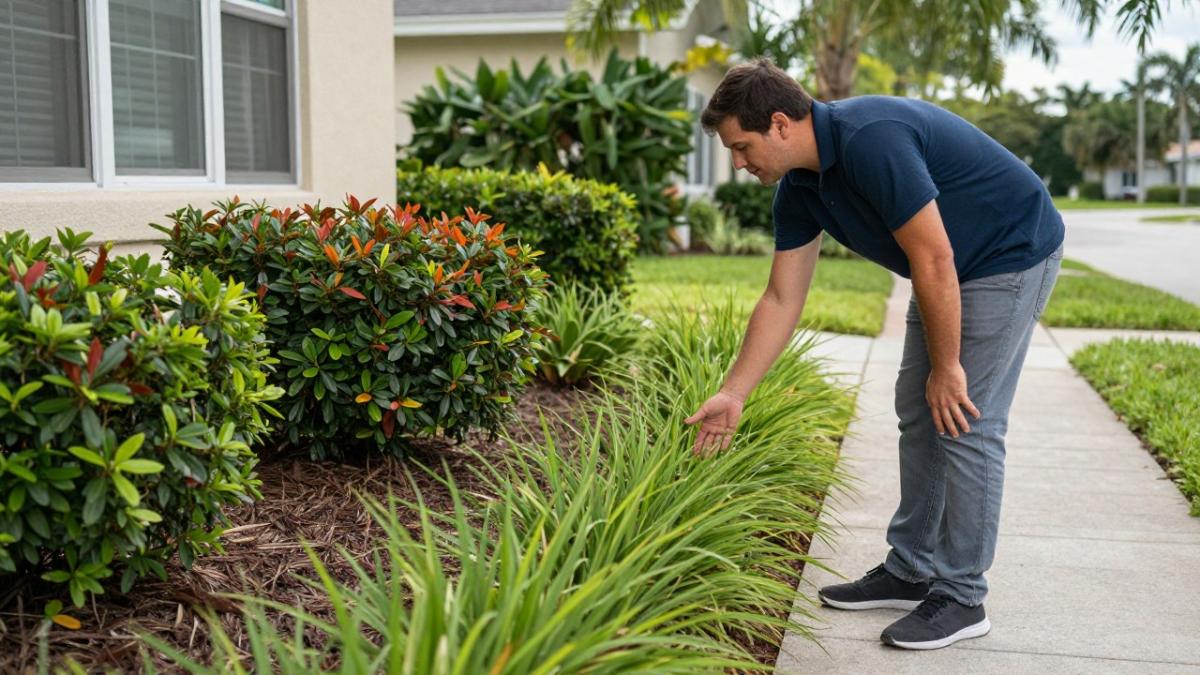
On our sandy soils, we favor native and well-adapted plants that handle drought after establishment. A practical starting palette for Fernandina Beach, Amelia Island, and Yulee yards includes:
- Salt- and wind-tolerant shrubs for properties near the Intracoastal and ocean: yaupon holly, Walter's viburnum, and coontie. Coontie is slow-growing, so plant it where it won't be mowed over.
- Sun-loving perennials and grasses for full-sun beds: beach sunflower, blanket flower, muhly grass, and sunshine mimosa. Muhly grass needs cutting back once a year in late winter to keep it from flopping.
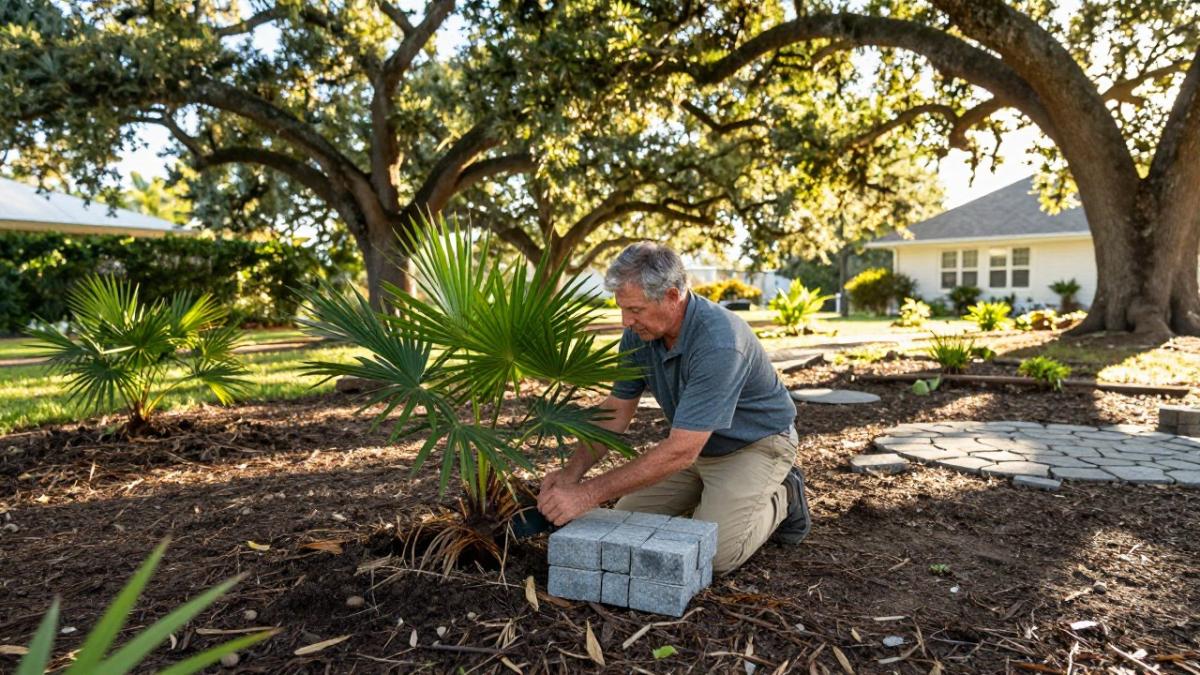
- Shade-tolerant understory for live oak canopies: saw palmetto, beautyberry, and Florida anise. These need less irrigation once established but do need room, beautyberry volunteers freely and will spread if unmanaged.
- Groundcovers instead of turf on narrow strips and slopes: perennial peanut and frogfruit. Both tolerate sandy soil and reduce mowing, but perennial peanut establishes slowly.
Mixing sun-tolerant shrubs with grasses and groundcovers keeps beds full while cutting irrigation demand.
Hardscape elements such as walkways and borders can frame plantings; our hardscape installation cost overview for Yulee explains what those features typically involve.
Watch out: planting the right species in the wrong spot, a full-sun grass under a live oak, or a salt-sensitive shrub on a windward Amelia Island lot, is the most common reason new beds fail in their first year, and no amount of irrigation fixes a placement mistake.
Here is a quick reference for the plant groups and their placement needs covered in this section.
| Plant group | Best placement | Key care note |
|---|---|---|
| Salt- and wind-tolerant shrubs | Near the Intracoastal and ocean | Coontie grows slowly; keep it out of mowing paths |
| Sun-loving perennials and grasses | Full-sun beds | Cut muhly grass back once a year in late winter |
| Shade-tolerant understory | Under live oak canopies | Beautyberry spreads freely if unmanaged |
| Groundcovers | Narrow strips and slopes | Perennial peanut establishes slowly |
Planning Irrigation and Drainage From the Start
Irrigation and drainage belong in the same conversation. Watering efficiently is one of the core Florida-Friendly principles, and a well-zoned system matching water to each area is part of the best landscape design north in Florida. Florida-Friendly Landscaping Guide, Water Efficiently principle Our water-saving irrigation tips and steps to lower water bills with irrigation show where the savings usually come from.
In practice, a well-planned system separates zones by plant type and sun exposure, turf on one set of heads, beds and shrubs on another, and drip or micro-spray for planting beds so water goes to the roots instead of the mulch surface. Rotor heads suit large turf areas; fixed-spray heads suit small, irregular spaces. A rain sensor and seasonal adjust schedule can keep the system from running during summer downpours.
Drainage matters just as much. Sandy soil moves water quickly, but compacted or low areas can still pond after a storm. Planning grades and drainage paths before planting prevents washed-out beds and standing water. Common solutions include:
- Regrading to move water away from the foundation and toward a safe discharge point.
- French drains and trench drains to capture surface water in low spots and carry it off.
- Dry creek beds that double as a landscape feature while handling roof and gutter runoff.
- Gutter downspout extensions, an inexpensive fix that solves a surprising share of wet-bed complaints.
Watch out: drainage water has to go somewhere legal. Discharging onto a neighbor's property or into a protected wetland or stormwater system can create problems, and Nassau County and local HOA rules may require permits or restrict what you can change. Before any major grading or drainage work, confirm what your HOA architectural review board requires and whether a permit applies.
Because irrigation and drainage decisions are hard to undo once beds and sod are in, this is the stage where a professional site inspection pays for itself. Veterans Landscape Management can review your site's conditions before recommending a plan for Fernandina Beach, Amelia Island, Yulee, and Nassau County properties.
Booking Your Landscape Design Consultation in Fernandina Beach
A design consultation puts all of this into one plan: site conditions, plant choices, irrigation zones, and drainage. Veterans Landscape Management serves Fernandina Beach, Amelia Island, Yulee, and Nassau County.
Contact Veterans Landscape Management to request a landscape consultation or project estimate. Contact us to discuss your yard and your options.
Frequently Asked Questions
How do you plan a landscape design for sandy soil and heavy rain?
Start by testing how water moves across the yard during a heavy storm. Sandy soil drains quickly but holds few nutrients, so planting beds benefit from organic amendments and mulch. Grade the ground so water flows away from the house, and direct downspouts toward planted areas or drainage routes. Florida-Friendly Landscaping guidance from UF/IFAS recommends putting a plan on paper first, which helps match plants and drainage to the conditions on your lot before any digging begins.
Which plants work well in coastal Northeast Florida yards?
Choose plants suited to salt air, sandy soil and seasonal rain. Many native and Florida-friendly shrubs, grasses and groundcovers handle these conditions with less irrigation once established. Right Plant, Right Place is a core principle of Florida-Friendly Landscaping, so match each plant to its sun exposure and drainage. A local landscape professional can recommend a mix that suits your specific lot and maintenance preferences.
What is the best time to install plants or sod in North Florida?
Planting timing depends on the species and the weather, so ask your landscape professional for a schedule tied to your plant list. Newly installed plants and sod need consistent moisture while their roots establish, and a properly designed irrigation system makes that easier. Veterans Landscape Management can review your site and recommend installation timing during a consultation.