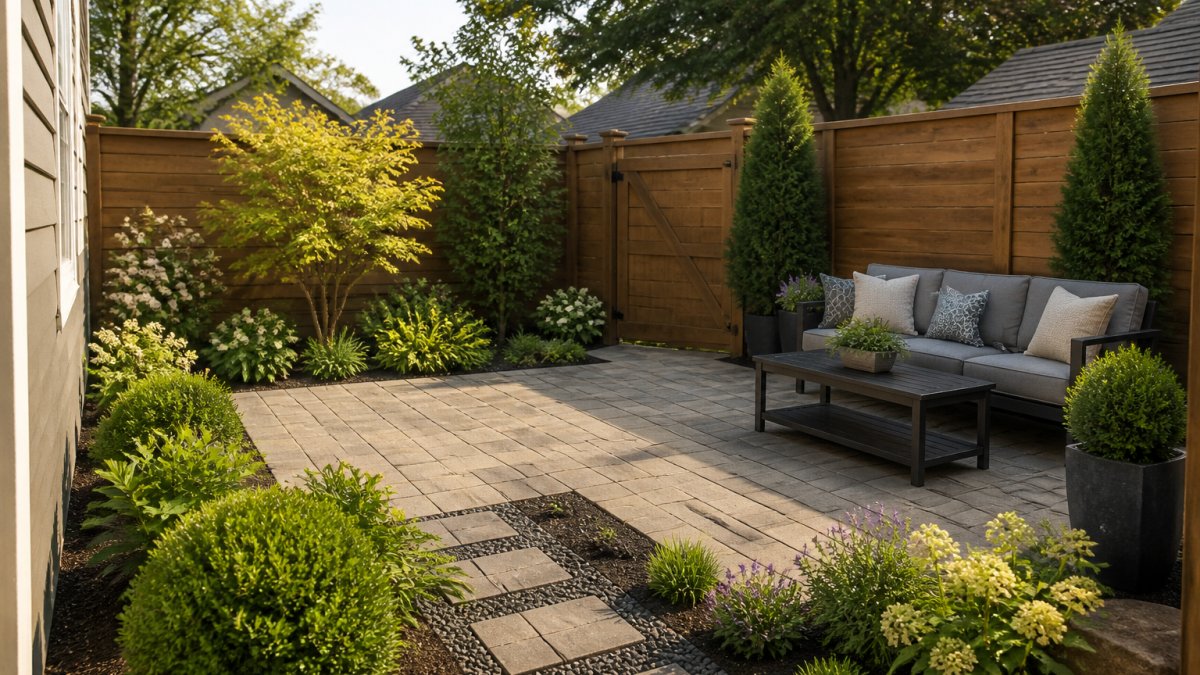
 listicle
How Do You Landscape a Small Yard?
Last Updated: October 28, 2026
Quick Summary
Successful small yard landscaping starts with measuring and mapping your space before buying plants, then using zones instead of one open lawn so the eye has somewhere to travel. Push patios to a corner, trade lawn for ground cover, and use vertical gardening to multiply growing space without eating ground area.
- Sketch your yard on graph paper at one square per foot and mark sun exposure at 9 a.m., noon, and 4 p.m.
- A single 4-by-8-foot raised bed holds more plants and looks more intentional than five small ones.
- Keep front walkways at least 4 feet wide and repeat plants in groups of three or five.
- Mount trellises a few inches off the fence so air moves behind plants and moisture doesn't rot wood.
- Mulch beds 2 to 3 inches deep and keep mulch pulled back from the foundation and trunks.
Table of Contents
- Start With a Plan: Measuring and Mapping Your Small Yard
- Small Backyard Landscaping Ideas That Maximize Space
- Small Front Yard Landscaping Ideas for Strong Curb Appeal
- Vertical Gardening: Trellises, Flowering Walls, and Hanging Planters
- Small Yard Privacy Ideas That Don't Shrink the Space
- Low-Maintenance Landscaping for Small Yards
- Budget Tiers, Drainage, and the Mistakes That Cost You Later
- Planning Your Small Yard Renovation With a Local Crew
- Frequently Asked Questions
Start With a Plan: Measuring and Mapping Your Small Yard
Good small yard landscaping starts with a tape measure, not a plant catalog. Before you buy a shrub, measure the house footprint, fence line, slope, and every door that opens onto the space.
- Sketch the yard on graph paper, one square per foot.
- Mark permanent features: house walls, windows, AC units, hose bibs, downspouts, and utility easements.
- Note sun exposure by hour. Watch the yard at 9 a.m., noon, and 4 p.m.; a spot sunny in January can be shaded by a live oak canopy by June.
- Mark drainage. Note where water pools after a storm, because that low corner will decide half your planting plan.
- Draw sight lines from the main windows. Those views set your focal points.
Small yard landscaping succeeds or fails on this step. The University of Florida IFAS Extension gardening resources are a solid reference for matching plants to local sun and soil conditions before you commit.
Small Backyard Landscaping Ideas That Maximize Space
The best small backyard landscaping ideas use zones instead of a single open lawn. Divide the space into a seating area, a planting edge, and a path, and the yard reads larger because the eye has somewhere to travel.
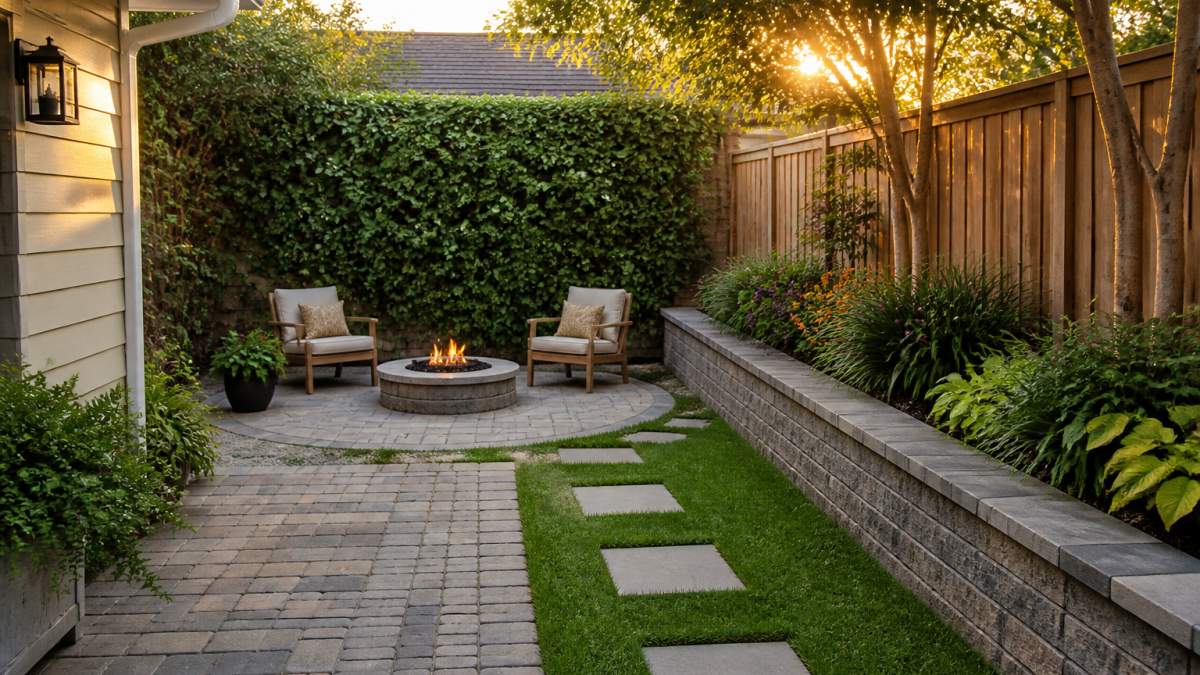
Start with these moves:
- Push the patio to a corner. A diagonal patio frees up the center and makes the yard feel wider.
- Trade lawn for ground cover. Small lawns are hard to mow and rarely used. Ground cover and mulch beds cut maintenance and add texture.
- Build one raised bed instead of five small ones. A single 4-by-8-foot bed holds more plants and looks intentional.
Small Front Yard Landscaping Ideas for Strong Curb Appeal
Front yard curb appeal comes down to three things: a clear walkway, layered plantings, and one strong focal point. Small front yard landscaping ideas work best when they simplify rather than add.
Layer beds from tall to short: ornamental trees or tall shrubs against the house, mid-size plants in the middle, low ground cover at the edge.
Symmetry helps on narrow lots. Matching planters flanking the door, a pair of compact shrubs at the walkway, and consistent edging read as deliberate design.
Vertical Gardening: Trellises, Flowering Walls, and Hanging Planters
Vertical gardening is the single biggest space multiplier in a small yard. A trellis, wall-mounted planter, or flowering wall turns blank fence into growing space without eating ground area.
Choose the support before the plant
Match the trellis to the mature weight of the vine, not its nursery size. A lightweight wood lattice handles annual vines and small clematis, but a mature trumpet vine or wisteria can pull a flimsy trellis off a wall.
Mount trellises a few inches off the fence so air moves behind the plants and moisture doesn't rot the wood. On masonry, use a standoff bracket kit rather than drilling flat against the surface.
Pick vines by sun, weight, and pruning tolerance
Climbing plants do the heavy lifting, but they are not interchangeable. In a small yard, the vine you choose determines how much pruning you sign up for:
- Confederate jasmine (Trachelospermum jasminoides), evergreen, fragrant spring flowers, moderate growth. Needs a sturdy support and light annual shaping; tolerates part shade.
- Trumpet vine (Campsis radicans), fast and vigorous, hummingbird-friendly, but aggressive. Best on a heavy metal trellis away from siding, and it needs hard annual pruning to stay in bounds.
- Climbing roses, long bloom season and strong structure, but they want full sun, good airflow, and annual dormant pruning. Choose a compact climber rather than a rambler for a small wall.
A simple rule: if you will not prune it at least once a year, do not plant a vigorous climber against a fence you care about.
Hanging planters and wall pockets need a water plan
Hanging planters work above patios and along fence tops, but anything overhead needs irrigation you can reach. Drip lines run up a wall easily and save you hauling a watering can every evening. Wall pockets and hanging baskets dry out fast because they hold little soil and catch wind; group them on one drip zone with a timer. Use a lightweight potting mix with perlite, and choose trailing plants such as trailing lantana, sweet potato vine, or bacopa that tolerate drying between waterings.
Hardscape makes vertical designs last
Hardscape supports vertical designs too. A low retaining wall creates a raised planting shelf against a fence, and built-in planters anchor a trellis at ground level. A built-in planter with a drip line and a trellis behind it is the most durable vertical setup in a small yard because the roots have real soil volume and the irrigation is hidden. Explore the hardscape construction options that pair well with vertical plantings.
Maintenance reality check
Vertical gardens concentrate upkeep. Vines need tying and training through the first two seasons, annual pruning to keep them off the roof and out of gutters, and periodic anchor checks as they gain weight. Hanging planters need watering every one to three days in summer heat unless they are on drip. For the look without the ladder work, choose a compact evergreen climber on a rigid trellis on the same drip zone as your beds.
Small Yard Privacy Ideas That Don't Shrink the Space
Privacy screens fail in small yards when they are solid and tall. A 6-foot fence around a 20-foot yard creates a box. The better approach is filtered privacy: layers that block sight lines without blocking light.
Consider these small yard privacy ideas:
- Layered plantings. A row of tall shrubs backed by a fence blocks views while softening the wall.
- Trellis screens. Open lattice with climbing plants gives privacy in one season and light all year.
- Strategic height. Place the tallest screening on the side with the closest neighbor, not on all four sides.
Keep plant spacing in mind. A shrub that matures to 8 feet wide needs 8 feet, and squeezing it against a fence guarantees constant pruning.
Low-Maintenance Landscaping for Small Yards
Low-maintenance landscaping for small yards is about plant selection and irrigation, not neglect. Choose the right plants and water them efficiently, and the yard mostly takes care of itself. But "low maintenance" is not one setting, it is a trade-off between watering, pruning, mowing, and seasonal cleanup. Decide which chores you will keep, then pick plants and hardscape that push the work onto the chores you don't mind.
Compare ideas by the work they create
Most small-yard designs fail not because plants die but because upkeep outpaces the homeowner's schedule. Here is how common choices compare on the four chores that matter:
Design choice | Watering | Pruning | Mowing | Seasonal cleanup |
|---|---|---|---|---|
Lawn (even a small one) | Moderate to high | Low | Weekly in season | Leaf and clipping cleanup |
Ground cover beds | Low once established | Low | None | Light |
Mulched shrub beds | Low to moderate | Moderate | None | Mulch refresh every 1-2 years |
Container gardens | High (daily in heat) | Low | None | Repotting and replanting |
Raised vegetable beds | Moderate to high | Low | None | Crop turnover each season |
Native perennial border | Low once established | Low to moderate | None | Cutback once a year |
If mowing is the chore you want gone, shrink the lawn to a shape a mower can reach in a few passes or replace it with ground cover. If you travel in summer, skip containers and hanging baskets unless they are on drip. If you dislike pruning, avoid fast-growing shrubs and vigorous vines.
Choose plants by zone, light, and water, not by photo
Native and Florida-friendly plants need less supplemental water once established, but "native" is not a guarantee of low maintenance. Match the plant to the actual light and soil in the spot, not the inspiration photo. Reliable, low-water choices for small beds include:
- Muhly grass (Muhlenbergia capillaris), clumping, drought-tolerant once established, and a fall color plant that needs only an annual cutback.
- Coontie (Zamia integrifolia), a slow-growing, evergreen cycad that works as a low-maintenance foundation plant and tolerates part shade.
- Beautyberry (Callicarpa americana), native shrub with fall berries for birds; prune lightly in late winter.
- Blanket flower (Gaillardia), long-blooming perennial for full sun and lean soil; avoid rich soil or it flops.
Group plants by water needs so one zone doesn't drown the succulents while the ferns dry out. A common pattern: thirstiest plants nearest the house where a hose bib is close, drought-tolerant plants at the far fence line.
Irrigate to the root zone, not the sidewalk
Mulch beds 2 to 3 inches deep to hold moisture and suppress weeds, and keep mulch pulled back from the foundation and trunks. A properly designed irrigation system matters more in a small yard, not less. In a compact yard, overspray stains hardscape, feeds weeds in the joints, and can push water toward the foundation.
Run a coverage test before you plant: turn the zone on for a few minutes and watch where the water lands. Dry spots and overshoot are easier to fix with a head swap or a new drip line than with extra run time.
Reduce the lawn without creating a mud pit
Trading lawn for ground cover is one of the highest-impact low-maintenance moves in a small yard, but the transition needs a plan. Sheet-mulch or solarize the turf first to kill it, then plant ground cover at the right spacing, most spreaders need 12 to 18 inches on center to close the canopy in one to two seasons. Until it fills in, expect weeds; a 2-inch mulch layer cuts that work substantially.
The upkeep calendar
A realistic small-yard calendar: deep watering once or twice a week in the growing season for new plants, a mulch refresh every one to two years, a late-winter cutback for perennials and ornamental grasses, and a spring check of irrigation heads and trellis anchors. If that feels like too much, the fix is fewer plant species and more hardscape or ground cover, not more gadgets.
Budget Tiers, Drainage, and the Mistakes That Cost You Later
Landscaping budgets vary widely with scope, materials, and site conditions, so treat any single number with suspicion. You can review the current offer to see what a small-yard project might cost.
Plan around three tiers instead of a number:
Tier | What It Covers | Typical Scope |
|---|---|---|
Refresh | Mulch, pruning, seasonal color, minor repairs | Existing beds and lawn kept as-is |
Renovation | New planting beds, sod, edging, irrigation fixes | Reworking the layout within the current footprint |
Full Build | Patio, retaining walls, lighting, drainage, new plantings | Complete outdoor living area from bare ground |
Drainage is where budgets quietly break.
The other costly errors are planting too close to the house, choosing fast-growing shrubs for tight spaces, and installing irrigation without checking coverage.
Planning Your Small Yard Renovation With a Local Crew
A local crew who knows your soil, storm patterns, and HOA rules will save you expensive trial and error. We offer discounted rates to active military, retired veterans, and first responders.
When you're ready to move from ideas to a plan, reach out to us today.
Frequently Asked Questions
How can you make a small yard look bigger?
Use diagonal lines and curves in paths and planting beds instead of straight lines that stop at the fence. Keep the lawn edge low and the planting tall at the perimeter so the eye travels upward. A single focal point, such as a fire pit or water feature, gives the space a destination. Light-colored pavers and repeated plant colors also stretch the visual depth. These small yard landscaping moves cost little but change how large the space feels.
What are the best plants for a small yard?
Choose compact varieties and repeat a few species rather than collecting many. Match plants to your sun exposure and drainage.
How do you add privacy to a small yard without blocking light?
Use tall, narrow plants, slatted wood or metal screens, and wall-mounted planters instead of a solid fence. Slatted screens block sightlines while letting air and light through. Climbing plants on a trellis add density in one season. Keep the bottom two feet of any screen open or planted low so the yard still reads as open. Layering a screen with a small seating area behind it creates a private corner without walls.
How much does a small yard landscaping project cost?
Pricing depends on the project. Reach out to Veterans Landscape Management for current pricing or a quote.
Landscaping a small yard rewards planning over impulse. Measure first, choose plants that fit the space at maturity, and solve drainage before you build anything. Veterans Landscape Management handles design, hardscape, irrigation, and low-voltage lighting as one coordinated project, so the pieces fit together instead of fighting each other. Get started with Veterans Landscape Management and turn your compact yard into a space you actually use.
