 How-to
Preparing a Sandy Yard for New Sod in Florida
Last Updated: November 12, 2026
Quick Summary
To prepare a sandy yard for new sod in Florida, clear debris, roots, rocks, weeds, and old stumps, then grade soil gently away from the house toward swales or drains. Fill low spots with screened topsoil rather than pure sand, and compact lightly before rechecking with a long straightedge. Good sandy yard sod prep also means fixing soil with compost and a starter fertilizer before sod arrives.
- Sugar sand shifts, settles, and drains fast, so a yard that looks flat can pool water after storms.
- UF/IFAS recommends testing pH and nutrient levels before adding any soil amendments.
- Work compost or well-rotted manure into the top few inches to bind sand and hold moisture.
- Keep the top inch of soil under fresh sod consistently moist through the first week.
- Hold fertilizer for about 30 days after sod installation.
Table of Contents
- How to Level a Sandy Yard Before Sod Goes Down
- Choosing Soil Amendments for Sandy Lawns
- Irrigation System Requirements for New Sod
- Frequently Asked Questions
How to Level a Sandy Yard Before Sod Goes Down
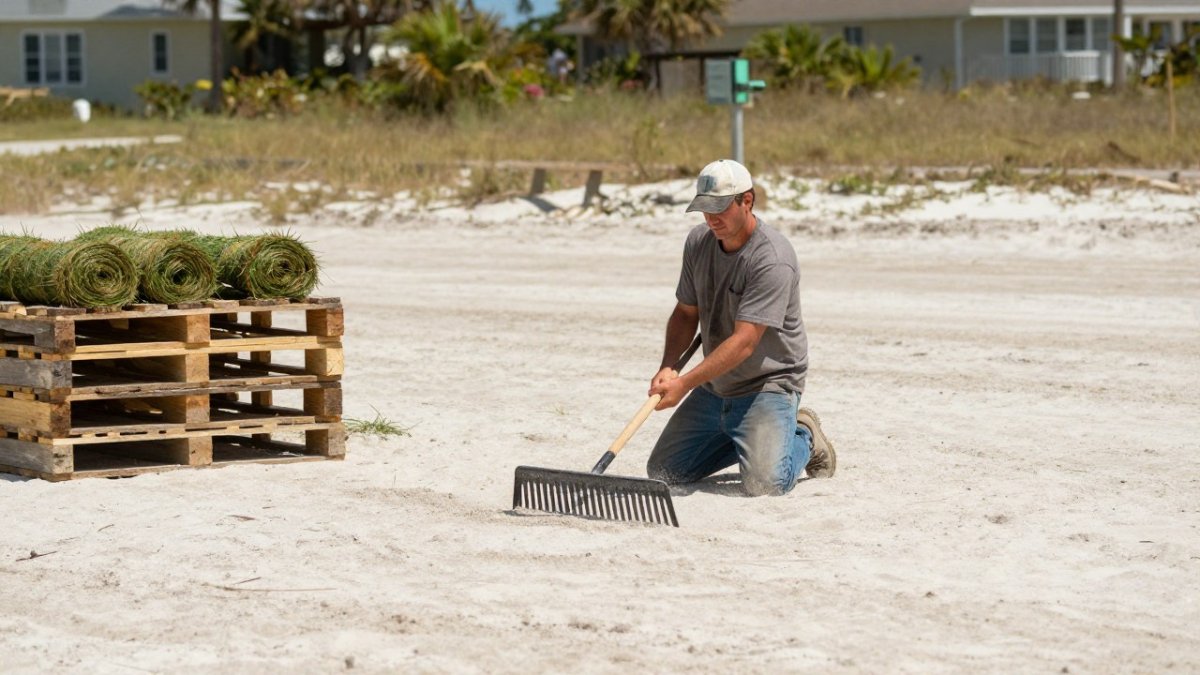
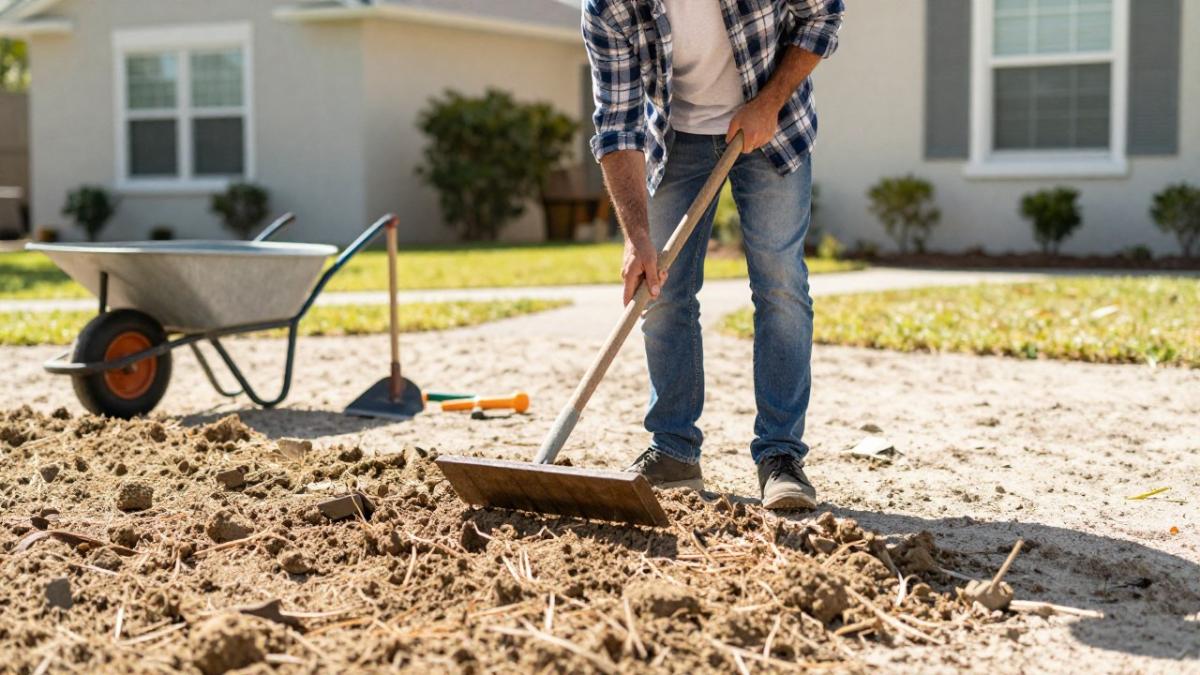
Learning how to prepare a sandy yard for new sod in Florida starts with leveling, and sandy yard sod prep starts with a hard truth: sugar sand shifts, settles, and drains fast, so a yard that looks flat today can pool water after the first summer storm. The sequence rarely changes.
Clear the site first. UF/IFAS guidance on planting your Florida lawn calls for removing debris, brush, roots, rocks, weeds, and old stumps, then leveling before sod goes down.
Then grade for drainage, not just appearance:
- Slope soil gently away from the house and toward swales or drains
- Fill low spots with screened topsoil, not pure sand
- Compact lightly, then recheck with a long straightedge
For large grading jobs, contact us for an inspection and estimate before you rent equipment.
Here is the leveling sequence the article lays out for a sandy Florida yard before sod goes down.
| Step | What to do |
|---|---|
| Clear the site | Remove debris, brush, roots, rocks, weeds, and old stumps |
| Grade for drainage | Slope soil gently away from the house toward swales or drains |
| Fill low spots | Use screened topsoil, not pure sand |
| Compact and check | Compact lightly, then recheck with a long straightedge |
Choosing Soil Amendments for Sandy Lawns
Sandy soil drains well but holds almost no nutrients or water, so amendments matter more for sandy yard sod than in clay. Our rule of thumb: fix the soil before you buy the sod.
Start with a soil test. UF/IFAS soil preparation guidance recommends testing pH and nutrient levels before adding anything, so you amend to actual needs instead of guessing.
What to work in:
- Compost or well-rotted manure to bind sand particles and hold moisture
- Lime only if the test shows low pH; gypsum where sodium is high
- A starter fertilizer worked into the top few inches
Skip deep tilling if your soil is already loose. Many Florida lawns only need the top few inches blended.
Planning the whole yard? See 7 Steps to Plan a Backyard Landscape in Florida.
Irrigation System Requirements for New Sod
New sod needs water immediately and often. The top inch of soil under fresh sod must stay consistently moist through the first week, according to University of Florida guidance on new sod watering, with several short cycles per day at first.
Then taper to fewer, deeper cycles as roots knit into the sand, and check coverage with tuna cans so no zone runs dry.
Two more requirements:
- Keep sod seams tight and rolled for root-to-soil contact
- Hold fertilizer for about 30 days after installation
Need help with setup or repairs? Review our sprinkler maintenance service and these water-saving irrigation tips.
Preparing a sandy yard for new sod in Florida rewards patience: level first, amend the sand, then dial in irrigation before a single roll goes down. Veterans Landscape Management brings over 20 years of local experience, discounted rates for active military, veterans, and first responders, and full design and installation services for sod, irrigation, drainage, and landscape lighting. Get started with Veterans Landscape Management and give your new sod the ground it deserves.
Frequently Asked Questions
Can I put sod directly over sandy soil in Florida?
You can lay sod over sandy soil, but bare sand alone rarely holds enough moisture or nutrients for roots to establish well. Clearing debris and leveling the soil before laying sod gives roots a better start. Mixing in organic matter before sodding improves moisture retention in Northeast Florida's sandy yards, and a soil test tells you whether pH or nutrient adjustments are needed first.
What soil amendments are best for sandy yards in Northeast Florida?
Compost, peat moss, and well-rotted manure are commonly recommended to help bind sandy soil particles and improve water and nutrient retention. A soil test should come first so you know whether lime or other adjustments are needed for pH. Because Florida's sandy soils leach nutrients quickly, amendments worked into the top few inches before sodding give new roots a better start than sand alone.
How soon should I water new sod, and how often?
The first week is the critical window. Keeping the sod and the top inch of soil beneath it consistently moist is important right after installation. Frequency drops as roots establish. If you are unsure whether your irrigation covers every zone evenly, an inspection before delivery saves a lot of guesswork.