 How-to
7 Steps to Plan a Backyard Landscape in Florida
Last Updated: November 5, 2026
Quick Summary
To plan a backyard landscape, first assess your yard's sun exposure, soil, drainage, and existing features, then measure the space and draw a base plan to scale. Next, define how your family will use the yard, set priorities and phases, and choose Florida-friendly plants that match your site's conditions.
- Walk the yard at several times of day and after heavy rain to record sun, soil, and drainage.
- Dig a hole about a foot deep, fill it with water, and time how fast it drains.
- Draw the base plan to scale, such as one square equals one foot.
- Fix irrigation and drainage before installing sod, planting beds, or decorative features.
- Space plants for their mature size and plant in odd-numbered groups of three or five.
Table of Contents
- Assess Your Yard and Existing Conditions
- Measure Your Space and Draw a Base Plan
- Define How You Will Use the Backyard
- Set Priorities, Budget, and Phases
- Use a Landscape Plan Template and Design Tool
- Choose Simple Backyard Landscaping Ideas and Plants for Florida
- Schedule Your Free Landscape Consultation in Fernandina Beach
- Frequently Asked Questions
Planning a backyard landscape in Northeast Florida takes more than picking pretty plants. Veterans Landscape Management has over 20 years of experience serving the North East Florida community, and the best yards start with a plan. This guide walks you through seven steps, from sizing up your yard to choosing plants that handle our sandy soil and heavy summer rain.
Assess Your Yard and Existing Conditions
Start by walking your yard at several times of day and after a heavy rain. The goal is a written inventory of what the site gives you and what it fights against. In Northeast Florida, three conditions drive most design decisions: sandy, fast-draining soil that holds few nutrients; intense summer sun and heat; and heavy seasonal rainfall that can overwhelm flat or poorly graded lots.
Work through this checklist and write down what you find for each zone of the yard:
- Sun exposure: Track where full sun, part shade, and deep shade fall at mid-morning, midday, and late afternoon. Note how the path of the sun changes between winter and summer, because a bed that is shaded in January may bake in July.
- Soil: Dig a small hole and squeeze a handful of soil. Sandy soil crumbles and drains quickly; it also leaches water and nutrients fast, which is why plantings often benefit from organic matter and attentive irrigation while they establish.
- Drainage and slope: After a storm, note where water stands for hours, where it sheets across the surface, and where it exits the property. Low spots, compacted areas, and downspout discharge points are the usual culprits. Standing water is the single most common cause of failed plantings and lawn decline in this region.
- Existing features: Mark trees, fences, sheds, patios, driveways, utility lines, septic fields, and irrigation heads and valves. Note tree canopies and root zones, since digging near established roots damages both the tree and your new beds.
- Wind and salt exposure: Properties closer to the water face more wind and salt spray, which narrows plant choices and argues for wind-tolerant screens and salt-tolerant species.
- Access: Note gate widths and the path a wheelbarrow, sod pallet, or small equipment would take. Poor access changes how a project is staged and what can be installed.
A simple way to test drainage is to dig a hole roughly a foot deep and wide, fill it with water, and see how fast it drains. Fast drainage points to sandy soil that needs more irrigation; slow drainage points to a compaction or grading problem that should be corrected before you plant.
Watch out: Do not skip this step or treat it as a formality. Most plant failures and soggy-lawn complaints trace back to placing the right plant in the wrong light or water condition, and fixing drainage after beds and sod are installed is far more disruptive than diagnosing it first.
If your assessment turns up standing water, soggy turf, or irrigation heads that do not cover evenly, that is the point to bring in a professional. Veterans Landscape Management can inspect drainage and irrigation at your property and tell you what needs correcting before any planting begins. For a deeper look at how a small space can work, see our guide on how to landscape a small yard.
Measure Your Space and Draw a Base Plan
Next, measure your yard and put it on paper. You do not need fancy software. Graph paper, a tape measure, and a pencil work well.
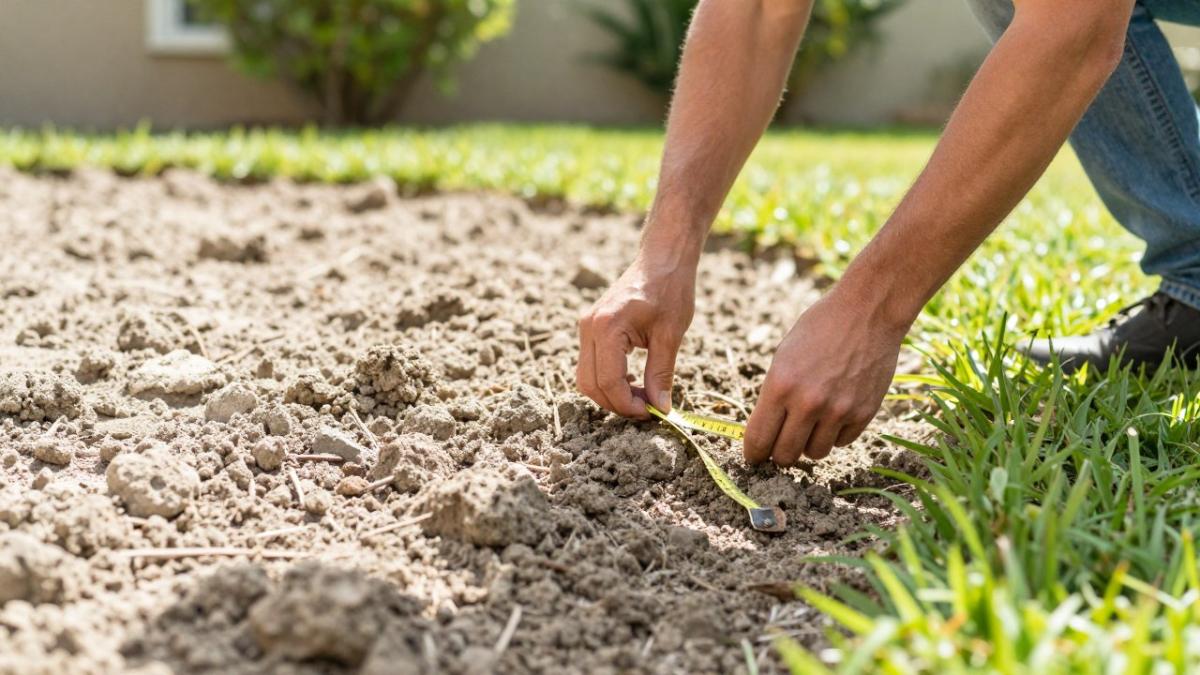
- Measure the length and width of the yard.
- Mark the house, patios, sheds, and fences.
- Note the location of trees, sprinkler heads, and light fixtures.
- Draw everything to scale, such as one square equals one foot.
This base plan becomes the foundation for every decision you make later.
Define How You Will Use the Backyard
Think about how your family actually uses the space. A backyard for weekend cookouts needs different features than one for kids, pets, or quiet mornings with coffee.
Ask yourself these questions:
- Will you entertain guests, or do you want a private retreat?
- Do kids or pets need open lawn space to play?
- Would a seating area, fire pit, or shaded patio get daily use?
Mark these zones on your base plan. Clear zones keep the design practical and prevent wasted space.
Set Priorities, Budget, and Phases
Rank your wishes by importance. Some projects are best done in phases, which spreads out the cost and lets you adjust as you go.
Watch out: Don't install decorative features before fixing irrigation or drainage. Repairs after the fact often cost more than doing them first.
A typical phased plan looks like this:
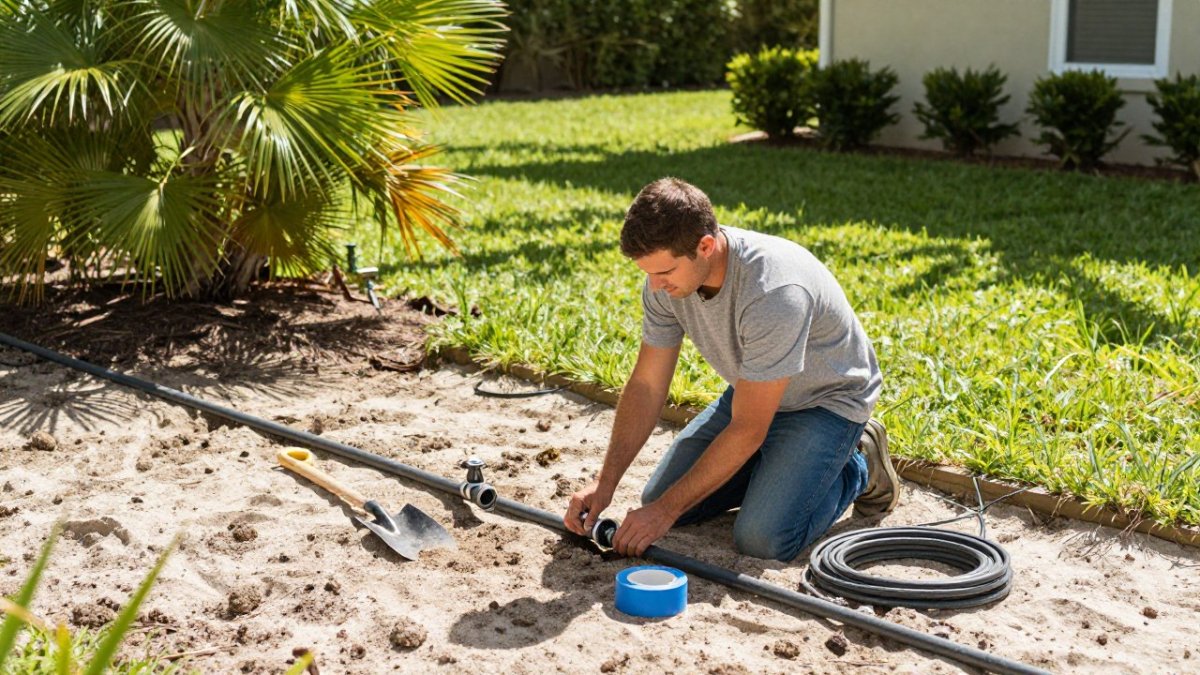
- Phase 1: Irrigation and drainage repairs
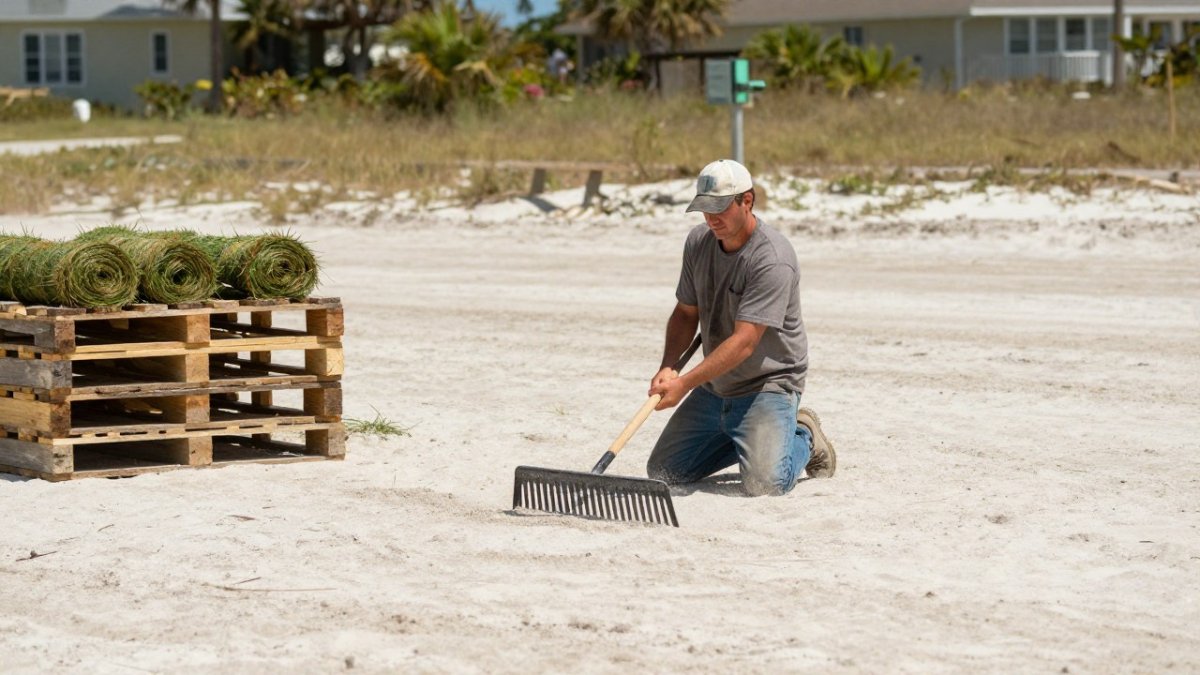
- Phase 2: Sod, grading, and planting beds
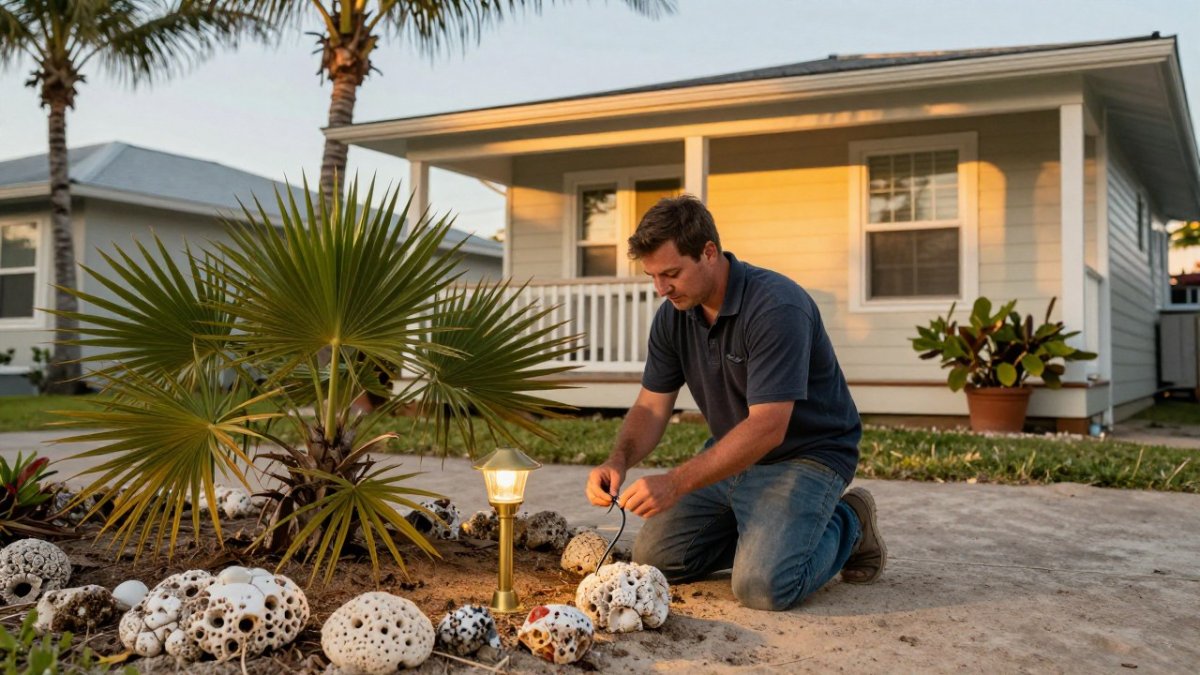
- Phase 3: Lighting, seating, and finishing touches
A site visit with Veterans Landscape Management can help you map out priorities. For a closer look at what renovations usually involve, read what an average landscape renovation really costs.
Use a Landscape Plan Template and Design Tool
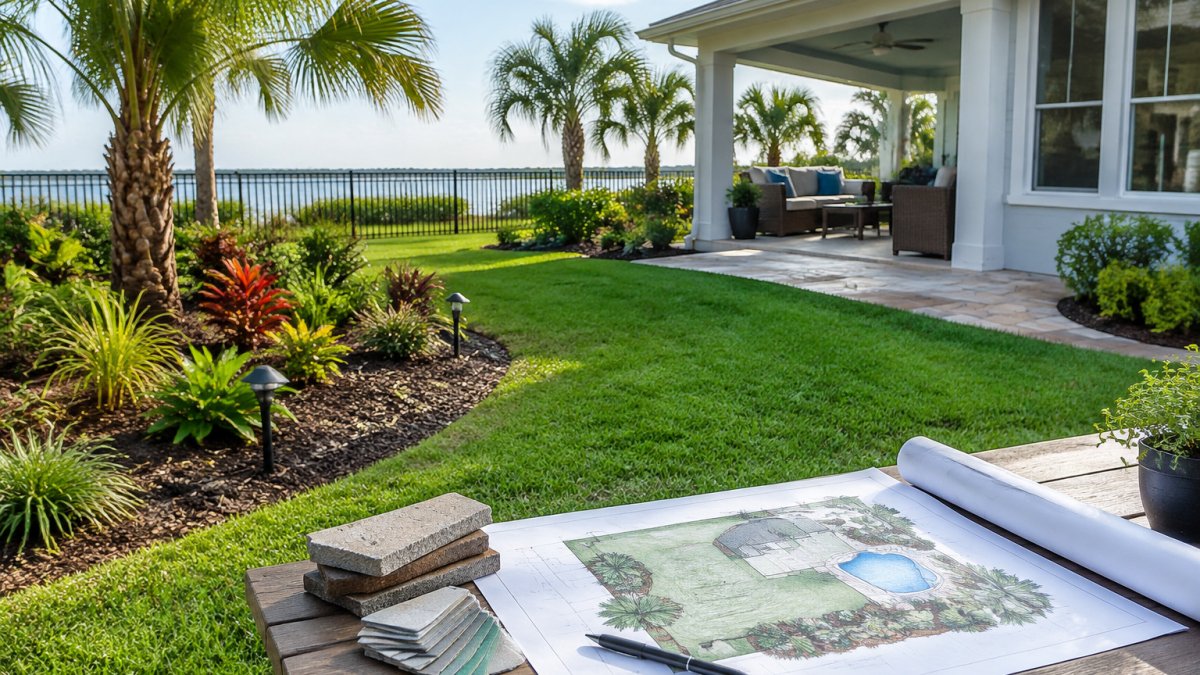
A simple template keeps your ideas organized. Create a page for each zone with columns for plant names, quantities, spacing, and mature size.
Free design tools can also help you test layouts before you buy anything. Look for one that lets you drag shapes onto a scaled map. Whichever method you choose, save a copy of your final plan so you can reference it during installation.
Choose Simple Backyard Landscaping Ideas and Plants for Florida
Plant selection is where a plan succeeds or fails. Match plants to the sun, soil, and water conditions you recorded during your assessment, and lean on Florida-friendly and native species that tolerate heat, humidity, sandy soil, and seasonal downpours with less water and fewer problems. UF/IFAS publishes Florida-Friendly Landscaping guidance that is a good reference for right-plant, right-place choices.
Start with these locally appropriate options:
| Plant Type | Example | Light Needs | Mature Size | Best Use | Maintenance Notes |
|---|---|---|---|---|---|
| Shrub | Dwarf yaupon holly | Sun to part shade | Roughly 3-5 ft tall and wide | Hedges and borders | Shear lightly to shape; tolerates sandy soil |
| Perennial | Coneflower | Full sun | Roughly 2-3 ft tall | Color and pollinators | Cut back after bloom; drought-tolerant once established |
| Groundcover | Perennial peanut | Full sun | Low, spreading mat | Erosion control and lawn alternative | Needs little mowing or fertilizer; good on slopes |
| Palm | Sabal palm | Sun to part shade | Large; give it room | Coastal feel and structure | Slow-growing; plant away from walks and drives |
| Ornamental grass | Muhly grass | Full sun | Roughly 3 ft tall | Texture and fall color | Cut back in late winter; very low water |
A few principles make the list work harder:
- Give plants their mature size. Space each plant for the width it will reach, not the size in the nursery pot. Crowding forces constant pruning and causes disease from poor airflow.
- Plant in odd-numbered groups. Groups of three or five of the same species read as intentional and natural, while single scattered plants look random.
- Plan for seasonal interest. Combine evergreens for year-round structure with flowering perennials and ornamental grasses that peak in different seasons, so the yard is not bare for part of the year.
- Repeat key plants and colors. Repeating a few species and one or two colors through the beds creates unity and flow, which is what separates a designed yard from a collection of plants.
- Match water needs to irrigation zones. Group thirsty plants together and drought-tolerant plants together so you are not overwatering one to satisfy the other. This is where good plant selection and efficient irrigation reinforce each other.
Watch out: Do not choose plants by looks alone or buy on impulse at the nursery. A sun-loving plant placed in shade, or a drought-tolerant plant set in a low, wet spot, will struggle no matter how well it is cared for.
If you want help matching plants to your soil, sun, and irrigation coverage, our team can build a planting plan for your beds and pair it with efficient irrigation and low-voltage lighting. We serve homeowners and property managers throughout Fernandina Beach, Amelia Island, Yulee, and Nassau County. For irrigation questions tied to your new plantings, see our sprinkler maintenance tips, then contact us to request a consultation or estimate.
Schedule Your Free Landscape Consultation in Fernandina Beach
Planning on your own is a great start, but a site visit catches what a sketch can miss, like hidden drainage problems or irrigation coverage gaps. Veterans Landscape Management offers consultations for homeowners in North East Florida. Review our landscape services to see what we can handle for your project, then contact us to request your consultation or project estimate.
Frequently Asked Questions
What is the 3-5-7 rule in landscaping?
The 3-5-7 rule is a common guideline for grouping plants: use odd-numbered clusters, with three, five, or seven of a single plant type placed together, which tends to look more natural than even rows. In a Northeast Florida backyard, it works well for shrubs and perennials that handle sandy soil and heavy rain. Start with one or two anchor groupings near the house, then repeat the same plants elsewhere to tie the design together. Mature size matters as much as the count, so check spacing before you buy.
How do I design a landscape plan for my yard?
Start by measuring the yard and sketching it to scale on graph paper. Mark existing features such as the house, trees, slopes, drainage paths, and sun exposure. Then list how you want to use the space, sketch possible layouts with simple bubble diagrams, and refine the plan into planting beds, paths, and lawn areas. Test the layout by checking sightlines and walking routes. A professional site visit can confirm drainage and irrigation needs before you commit.
How do I plan a backyard landscape for drainage and heavy rain?
Identify where water collects after storms by observing your yard during rainfall. Plan planting beds and paths so water flows away from the house, and consider swales or grading adjustments where needed. Choose plants suited to wet and dry cycles and avoid placing sensitive plants in low spots. In Northeast Florida's sandy soils and heavy rainfall, drainage planning should be part of the initial design, not an afterthought. Veterans Landscape Management can inspect your property and recommend practical drainage solutions.
How do I start planning a backyard landscape as a beginner?
Begin with a simple assessment: measure the space, note sun and shade patterns, and decide how you want to use the yard. Set two or three priorities, such as a lawn area, a planting bed near the entry, and a seating spot. Build the plan in phases so the work and cost stay manageable, and choose plants adapted to Florida conditions. If you want help reviewing your plan, you can request a landscape consultation or project estimate from Veterans Landscape Management.