 Listicle
Benefits of Low Voltage Lighting: What It Adds to Your Yard
Last Updated: October 30, 2026
Quick Summary
Low voltage lighting is a practical upgrade for yards, running on 12 volts stepped down by a transformer. It keeps wiring simple, allows fixtures along walkways, planting beds, and the base of palms or trees, and most systems use LED fixtures that draw little power.
- Low-voltage systems run on 12 volts, stepped down from household current by a transformer.
- Most low-voltage systems use LED fixtures, which draw little power and last for years.
- Low-voltage systems are generally easier to install and repair than line-voltage fixtures.
- Line-voltage fixtures run on standard 120-volt power and require buried conduit and a licensed electrician.
- Place the transformer within reach of a protected outdoor outlet and keep wire runs short.
Table of Contents
- Why Low Voltage Lighting Makes Sense for Your Yard
- Low-Voltage vs. Line-Voltage Landscape Lighting
- Planning Your Landscape Lighting Transformer and Wire Run
- Frequently Asked Questions
Low-voltage lighting is one of the most practical upgrades a Fernandina Beach homeowner can make outdoors. Low-voltage landscape lighting is a practical choice for Northeast Florida yards after dark. Contact Veterans Landscape Management to learn how it could work for your property.
Why Low Voltage Lighting Makes Sense for Your Yard
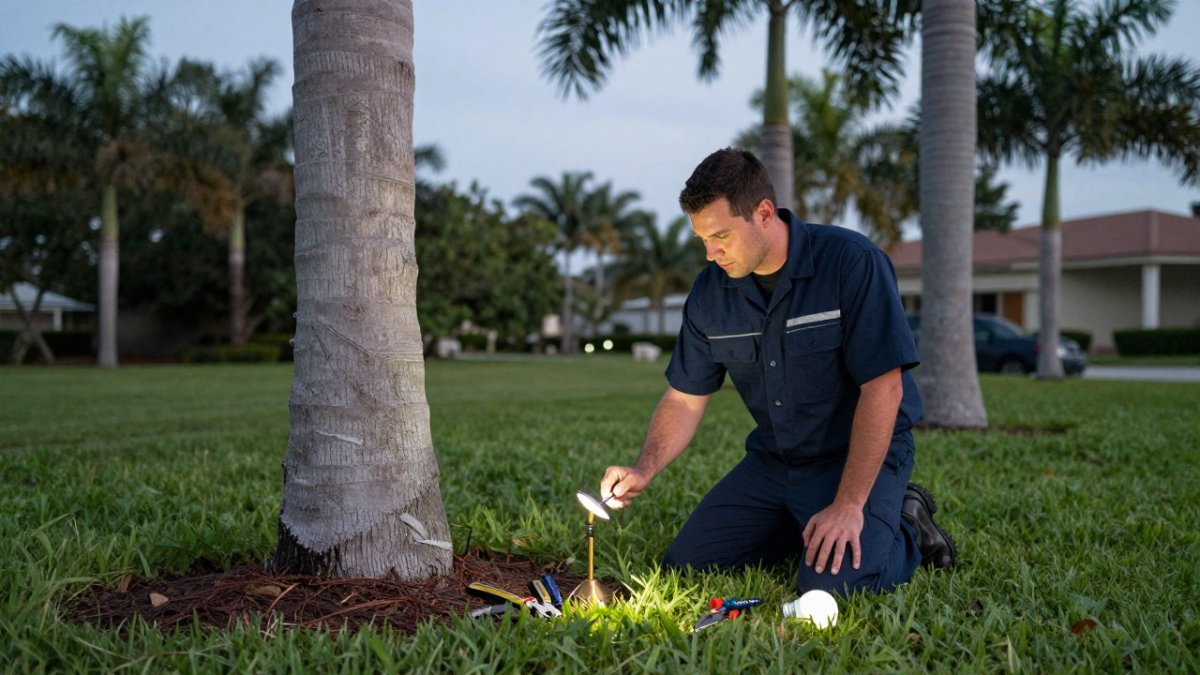
Low-voltage landscape lighting runs on 12 volts, stepped down from household current by a transformer. That lower voltage keeps wiring simple and lets you place fixtures along walkways, around planting beds, and at the base of palms or trees. Most systems use LED fixtures, which draw little power and last for years (Purchasing Energy-Efficient Light Bulbs).
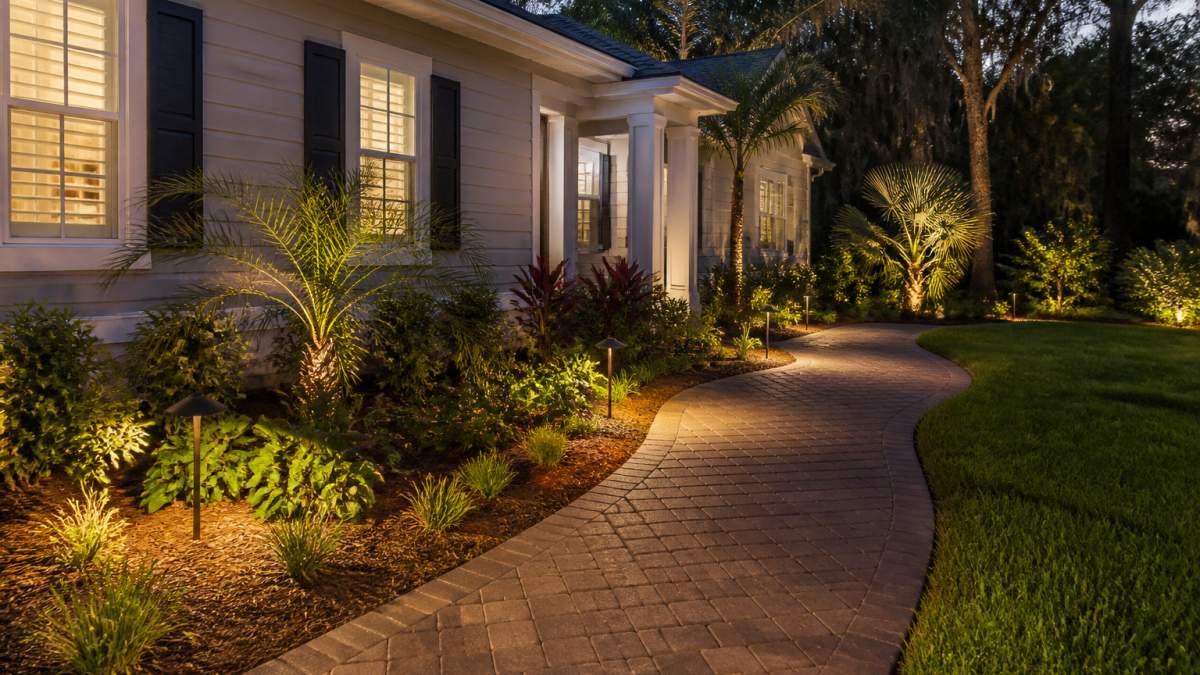
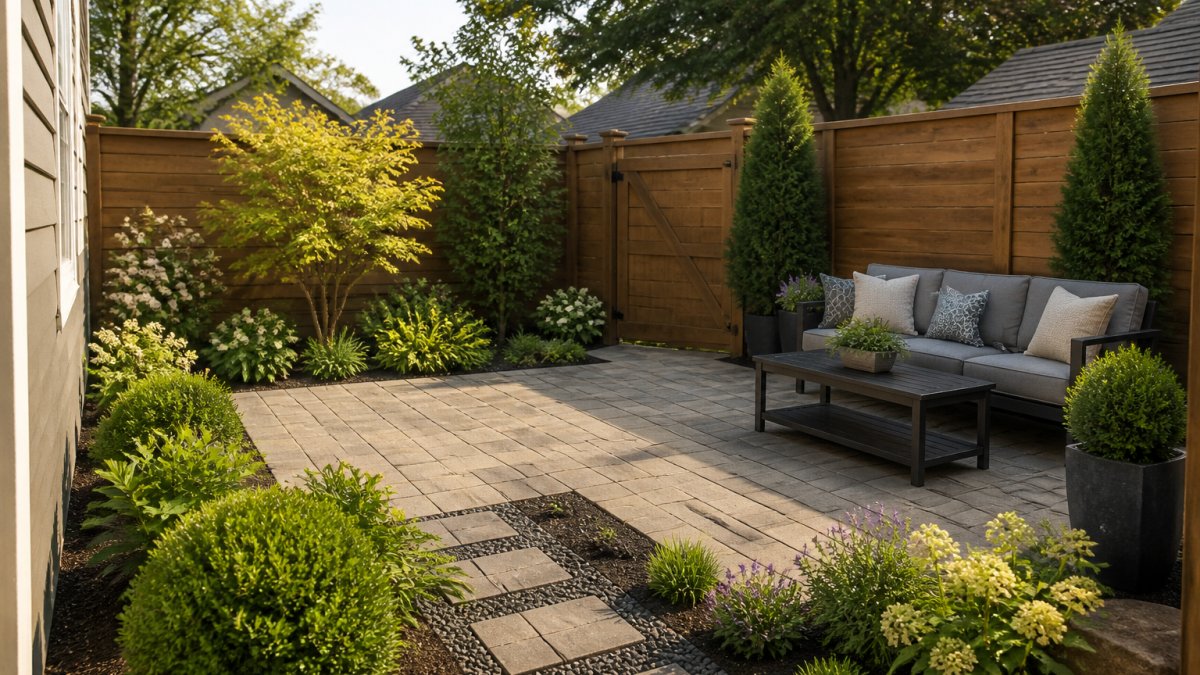
For smaller properties, starting with the entry walk and front planting beds is a common approach, since lighting in those areas adds curb appeal and visibility. You can see how lighting fits into the overall picture in our guide to small-yard layout ideas.
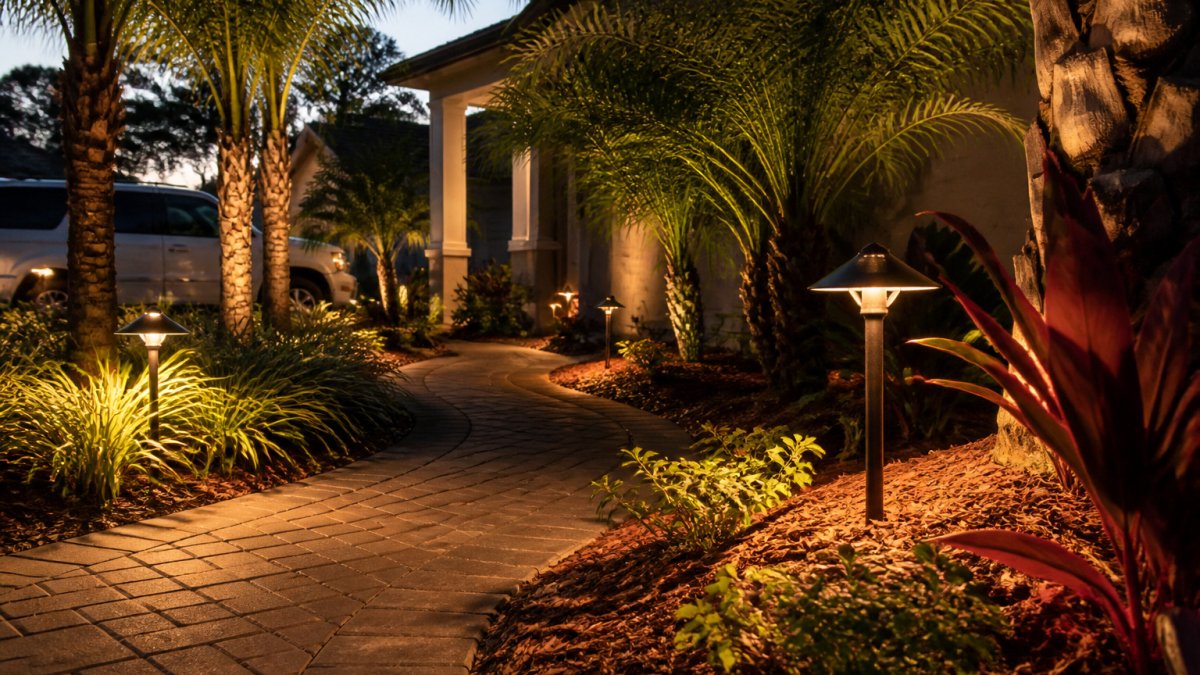
!Low-voltage landscape lights glowing softly along a walkway and garden bed beside a single-story home at dusk
Low-Voltage vs. Line-Voltage Landscape Lighting
Line-voltage fixtures run on standard 120-volt household power (Electricity 101). They are brighter and useful for security floodlighting, but require buried conduit and a licensed electrician. Low-voltage systems are generally easier to install and repair, which is why we use them for most residential projects. Solar lights need no wiring, though their output depends on sunlight and they are usually dimmer.
Planning Your Landscape Lighting Transformer and Wire Run
Before installation, plan the transformer location and wire run to each fixture. The transformer should sit within reach of a protected outdoor outlet, and wire runs should be kept short to maintain consistent brightness at the far end.
If you are planning a lighting project, contact Veterans Landscape Management to schedule an inspection or request a project estimate for your Fernandina Beach or Amelia Island property.
Here is how the main lighting options compare on the points the article covers.
| Option | Voltage and power | Installation and upkeep |
|---|---|---|
| Low-voltage landscape lighting | 12 volts from a transformer | Simpler wiring, easier to install and repair |
| Line-voltage fixtures | Standard 120-volt household power | Buried conduit, licensed electrician required |
| Solar lights | No wiring, relies on sunlight | Usually dimmer, output depends on sun |
Frequently Asked Questions
Does low-voltage landscape lighting use less electricity?
Yes. Low-voltage systems run on 12 volts supplied through a transformer, which draws far less power than standard line-voltage fixtures. Because the fixtures use LED bulbs, a typical system consumes only a small fraction of the electricity a comparable line-voltage system would. Your actual savings depend on the number of fixtures and how many hours they run each night. A professional can help you plan a layout that delivers the brightness you want without wasting energy.
Is low-voltage landscape lighting safer than line-voltage lighting?
Low-voltage systems are generally considered safer for homeowners because the low voltage at the fixtures reduces the risk of electric shock, and the wiring can often be installed at shallower depths than line-voltage cable. Safe installation still matters, including proper connections, weatherproof fittings, and a transformer placed where it is protected from rain. Hiring a licensed or experienced installer helps ensure the system is built correctly for Florida's heavy rainfall and sandy soils.