 How-to
Landscape Lighting Installation Florida: A Coastal Homeowner's Guide
Last Updated: November 22, 2026
Quick Summary
Landscape lighting installation in Florida must account for salt air, blowing sand, and summer storms, so most failures here are connection problems caused by moisture and salt rather than bulbs. A low-voltage system with waterproof connectors and solid brass or copper fixtures holds up best in coastal Northeast Florida yards.
- A low-voltage system has four parts: transformer, main cable, waterproof connectors, and fixtures.
- Voltage drop is the most common cause of uneven lighting on long cable runs.
- Split long runs into shorter home runs instead of daisy-chaining every fixture on one cable.
- Solid brass and copper fixtures resist salt-air corrosion better than painted aluminum.
- Before a named storm, shut off the transformer at the breaker or timer.
Table of Contents
- What Florida's Coast Does to Your Landscape Lighting
- Why Low-Voltage Landscape Lighting Fits Sandy, Storm-Prone Yards
- Uplight Landscape Lighting: Making Palms and Oaks Work After Dark
- Walkway Lighting Ideas That Hold Up in Humidity
- Frequently Asked Questions
What Florida's Coast Does to Your Landscape Lighting
Salt air, blowing sand, and summer storms punish outdoor fixtures in Northeast Florida. Landscape lighting installation in Florida has to account for all three, and this guide from Veterans Landscape Management explains what survives here and what fails. The National Association of Landscape Professionals industry statistics describe a large, growing outdoor-services market, but local conditions decide whether a system lasts. Most failures we see are not bulb problems. They are connection problems caused by moisture and salt.
Why Low-Voltage Landscape Lighting Fits Sandy, Storm-Prone Yards
Low-voltage landscape lighting runs on a stepped-down transformer rather than household current. It suits coastal yards because the reduced current is more forgiving of the moisture that never quite leaves the ground here. Read more about the benefits of low voltage lighting before committing to a layout.
How the system actually works
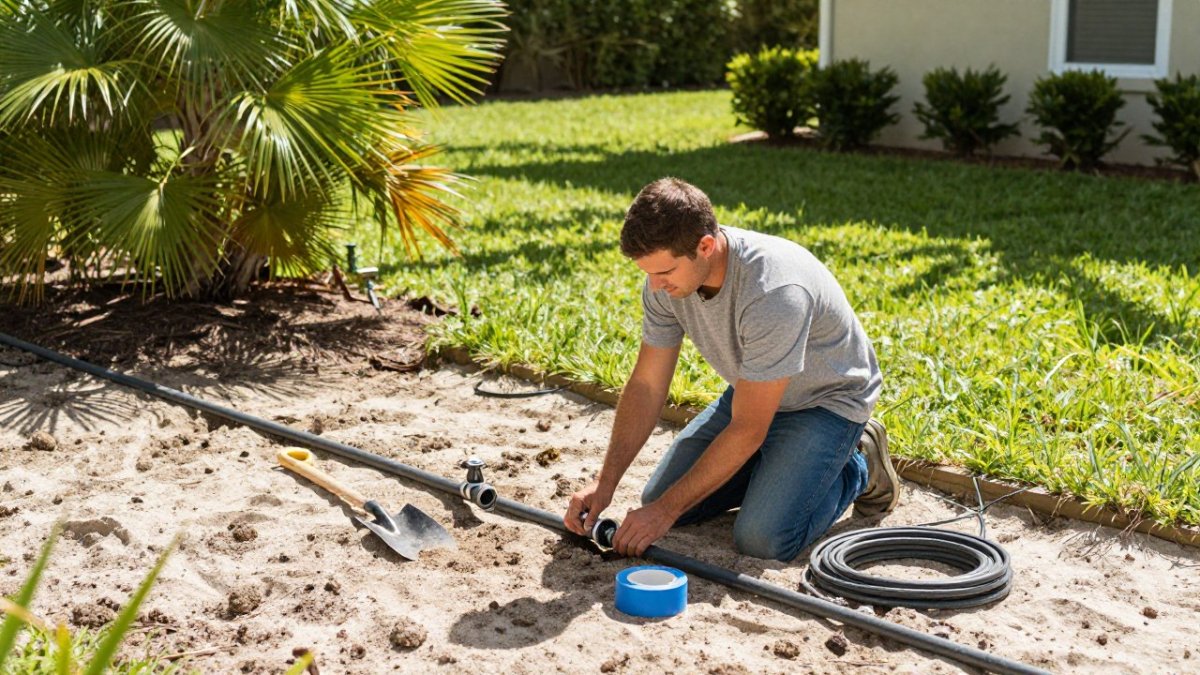
A low-voltage system has four parts: a transformer plugged into an outdoor GFCI receptacle, a main cable buried a few inches deep, waterproof connectors, and the fixtures. Because the voltage is low, the cable can be direct-burial and fixtures need no rigid conduit, so retrofits require no deep trenching or sod removal.
Sizing the transformer and avoiding voltage drop
Voltage drop is the most common reason a system looks uneven: fixtures at the far end of a long run receive less power and appear dim. Size the transformer with adequate headroom above total fixture wattage, and split long runs into shorter home runs rather than daisy-chaining everything on one cable.
Wiring in sandy soil
Northeast Florida's sandy soils drain quickly, which is good for cable longevity, but they also shift and settle. Bury main cable deep enough that mowers and edging tools will not nick it, and leave slack at each fixture connection so settling soil does not pull connectors apart. Waterproof connectors resist the corrosion that salt air accelerates.
Florida electrical code and permitting
Low-voltage landscape lighting is generally treated differently from line-voltage electrical work, but the rules are not uniform across every jurisdiction. In many areas, a homeowner may install a listed low-voltage system on an existing GFCI-protected circuit without a permit, while new outdoor receptacles, transformer hardwiring, or work beyond the manufacturer's instructions may require a licensed electrician and a permit. The practical step is to call the local building department before work begins and confirm what applies to your address. The U.S.
Salt air, humidity, and storm exposure
Salt air attacks the weakest metal first: connectors, set screws, and painted aluminum housings. Solid brass and copper fixtures resist corrosion well in coastal conditions. Look for fixtures rated for wet locations and, where possible, an IP rating reflecting resistance to water and dust.
When you are ready to plan a system for a Fernandina Beach, Amelia Island, or Yulee property, contact us to schedule a site visit and walk the layout with you.
Here are the core system facts to keep in mind before planning a coastal low-voltage layout.
| Item | Value | Note |
|---|---|---|
| System parts | Transformer, main cable, connectors, fixtures | Transformer plugs into outdoor GFCI receptacle |
| Cable burial depth | A few inches deep | Direct-burial cable, no rigid conduit needed |
| Most common uneven-lighting cause | Voltage drop | Far-end fixtures receive less power and appear dim |
| Fix for long runs | Split into shorter home runs | Avoid daisy-chaining everything on one cable |
| Best coastal fixture metals | Solid brass and copper | Resist salt-air corrosion better than painted aluminum |
| Fixture rating to look for | Wet-location rated, with IP rating | Reflects resistance to water and dust |
| Before a named storm | Shut off transformer at breaker or timer | Inspect connections afterward |
| After a storm | Replace connectors showing green or white corrosion | Corrosion is the sign to act on |
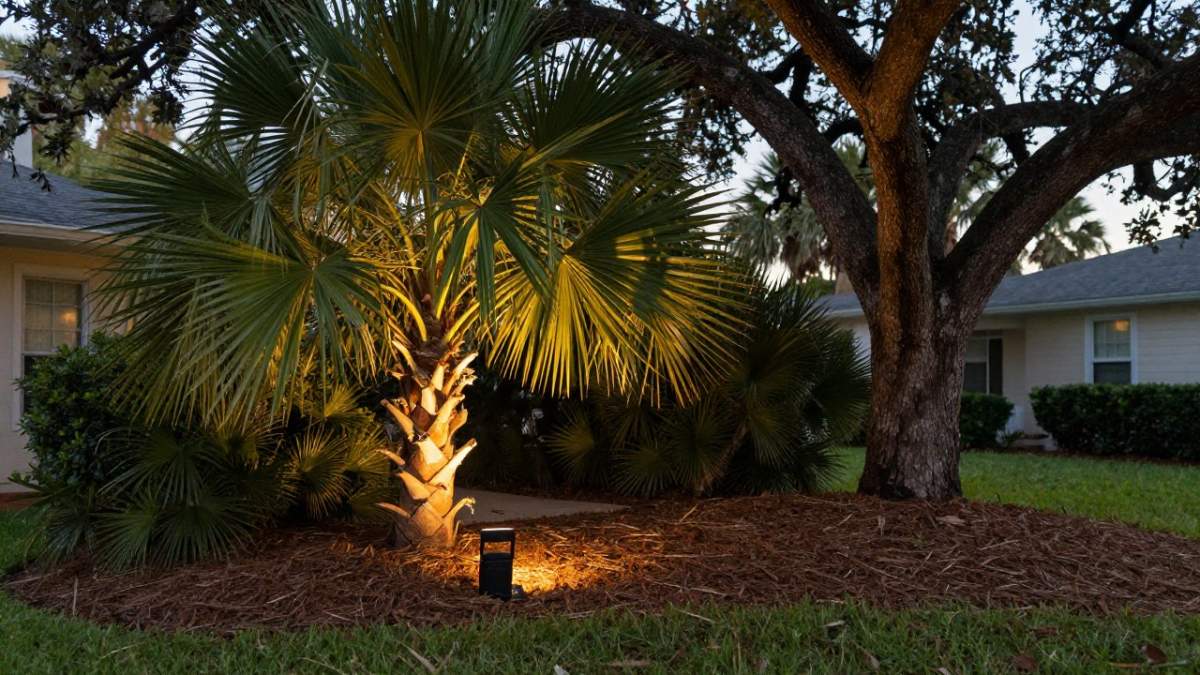
Uplight Landscape Lighting: Making Palms and Oaks Work After Dark
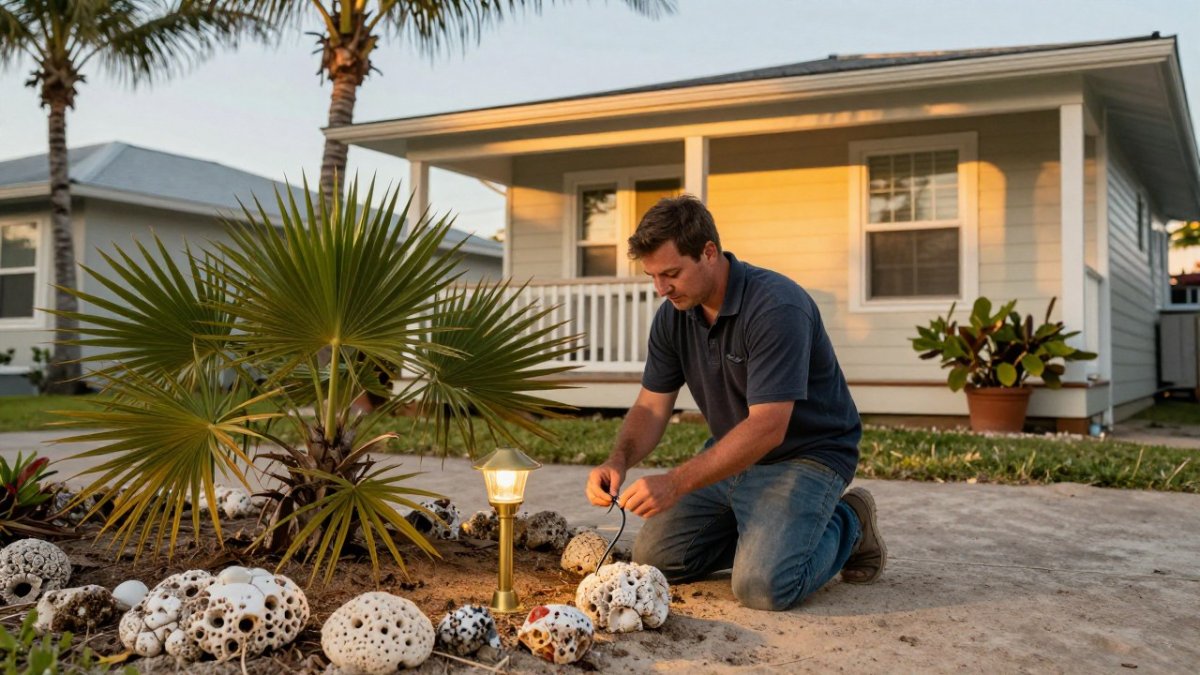
Uplighting aims a narrow beam up a trunk so the canopy glows from below. On a sabal palm, place the fixture close to the base and angle it slightly outward to catch the fronds.
Walkway Lighting Ideas That Hold Up in Humidity
Path lights take the most abuse of any fixture: sprinkler overspray, mower strikes, and constant humidity. Choose solid brass or copper over painted aluminum, and set fixtures on the downhill side of a path so water drains away from the lens. If safety is your main reason for lighting a walk, our guide to landscape lighting for safety covers placement in more detail.
Spacing and layout that avoid overlighting
A common mistake is placing path lights too close together, which creates a runway effect and wastes fixtures. Space them evenly for coverage, then adjust for beam spread and fixture height. Keep fixtures out of the direct line of sprinkler heads and away from the walk edge where a string trimmer will reach them.
Fixture choices for coastal humidity
Solid brass and copper housings resist salt-air corrosion far better than painted aluminum, which tends to pit and peel. Look for a sealed lens with a gasket that can be reseated, and prefer models with a replaceable LED module so the whole fixture is not discarded when the light fails.
Wiring and voltage drop on long walks
Daisy-chaining too many fixtures onto one run causes voltage drop, and the far end of the path goes dim. On a long walkway, run two shorter home runs back to the transformer rather than one continuous cable, or use a higher tap. Keep connections above the soil line where possible, or use gel-filled connectors if they must be buried.
Maintenance through the seasons
Landscape lighting maintenance comes down to a seasonal walk-through: check connections after heavy rain, clear mulch from fixture tops, and trim growth that blocks the beam. In Northeast Florida, the highest-risk periods are the summer rainy season and any named storm. After a storm, inspect for water intrusion, corrosion at connectors, and fixtures that have shifted in saturated soil.
When to call a professional
A homeowner can handle bulb swaps and clearing mulch, but persistent dimming, flickering, or a dead section usually points to a wiring or connection problem that is easier to diagnose with a voltage meter and a layout plan.
Coastal yards here demand fixtures and layouts built for salt and storms, not a generic kit from a box store. Veterans Landscape Management designs and installs low-voltage, energy-efficient lighting, handles irrigation and drainage, and offers discounted rates for active military, retired veterans, and first responders.
Frequently Asked Questions
What type of landscape lighting works best in coastal conditions?
Solid brass and copper fixtures hold up best in salt air. They develop a patina instead of corroding, and their thicker housings resist the humidity that eats through cheaper aluminum and plastic. Pair them with sealed LED lamps and marine-grade connections, and mount fixtures where sprinklers won't spray them directly. On Amelia Island and along the Fernandina Beach waterfront, salt exposure is constant, so fixture material matters more than wattage. Ask any installer what the housing and connections are made of before you sign off.
How often should low-voltage landscape lighting be maintained?
Plan on a periodic check, ideally before summer storm season and again in fall. Maintenance covers re-aiming fixtures moved by mowers or storms, clearing mulch and leaf debris from lenses, tightening connections, and testing the transformer. After a named storm, walk the system and look for water in fixtures or cut lines. Sandy soil shifts, so stakes loosen over time and lights drift off target. A short seasonal visit prevents most outages and keeps the design looking the way it was planned.
Do you need an electrician to install landscape lighting in Florida?
Most low-voltage residential systems run off a plug-in transformer and don't require a licensed electrician, though local rules and HOA requirements vary, so confirm before work starts. Line-voltage setups, new outdoor outlets, and anything tied into your panel do need a licensed electrician. If your plan involves running power to a detached structure or adding circuits, that changes the scope. Ask your contractor which parts of the job fall under electrical licensing and get it in writing.